Rajgir Mahotsav: A Timeless Celebration of Bihar’s Cultural Soul
In the heart of Bihar lies a celebration that transcends time—a vibrant expression of heritage, harmony, and human spirit. Rajgir Mahotsav, held annually in the historic town of Rajgir, is more than just a cultural festival. It is a living museum, a melodic tribute, and a visual carnival that encapsulates the soul of ancient Magadh. With its roots deeply entwined in the spiritual and cultural legacy of India, Rajgir Mahotsav is a beacon that shines light on Bihar’s rich artistic traditions, classical forms of music and dance, and the enduring influence of its historical past.
1. Introduction: The Spirit of Rajgir Mahotsav
Rajgir Mahotsav, also known as Rajgir Dance and Music Festival, is a government-organized event that has become a landmark cultural occasion in Bihar. Initiated in 1986 by the Bihar Government, the festival takes place every year in the month of October or November, bringing together classical performers, folk artists, and contemporary talents from across the country.
Set against the scenic backdrop of the Rajgir hills and historic ruins, the festival is an immersive experience, filled with captivating performances, spiritual ambiance, and a blend of modern and traditional artistry. It is a homage to Bihar’s glorious past and a bridge connecting the ancient Magadh civilization with the contemporary cultural scene.
2. Historical and Cultural Significance of Rajgir
To understand Rajgir Mahotsav, one must first appreciate the historicity of Rajgir itself. Nestled in the Nalanda district, Rajgir was once the capital of the Magadh Empire under King Bimbisara and his son Ajatashatru around the 6th century BCE. The city holds sacred importance in Hinduism, Buddhism, and Jainism, as it was frequented by Lord Buddha, Lord Mahavira, and several Hindu saints.
Rajgir’s verdant valleys, hot springs, and ancient caves still echo with the footsteps of sages and kings. The city was the birthplace of early Buddhist teachings and the location of the first Buddhist Council. This deep historical backdrop makes Rajgir a symbolic venue for a cultural festival aiming to preserve and celebrate India’s spiritual and artistic heritage.
3. The Origins and Evolution of Rajgir Mahotsav
The origins of Rajgir Mahotsav lie in Bihar’s intent to promote its cultural richness and make Rajgir a prominent destination for cultural tourism. The first edition in the mid-1980s was modest, but over the decades, the festival has grown in stature and reach.
Initially focused on classical Indian music and dance, Rajgir Mahotsav today incorporates a wide spectrum of performances including:
-
Classical dances like Kathak, Odissi, Bharatnatyam, and Kuchipudi
-
Folk dances from Bihar and neighboring states
-
Hindustani and Carnatic classical music concerts
-
Instrumental performances
-
Martial arts and yoga demonstrations
-
Puppet shows, drama, and poetry recitations
The evolution reflects not only the dynamic nature of Indian arts but also the festival’s mission to include, celebrate, and revive lesser-known forms.
4. Dance: Expressions of the Divine
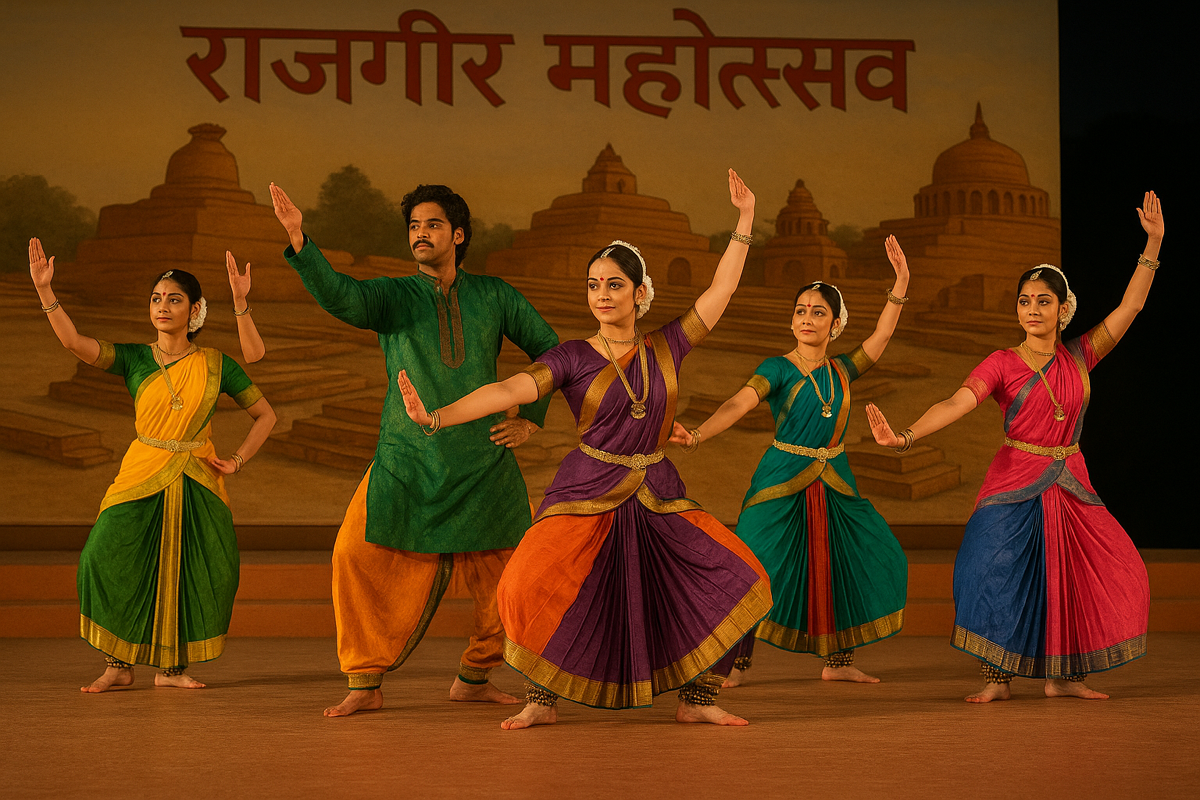
Dance is central to Rajgir Mahotsav’s charm. The rhythmic grace of classical Indian dance finds an evocative stage in Rajgir, where the spiritual setting heightens the audience’s emotional and aesthetic experience.
Kathak
Often featured prominently in the festival, Kathak—a dance form that originated in northern India—is a beautiful blend of storytelling, rhythm, and elegance. Through its rapid footwork and expressive gestures, Kathak dancers narrate stories from Hindu mythology, especially episodes from Lord Krishna’s life.
Bharatnatyam & Odissi
Bharatnatyam and Odissi, two of the oldest classical dance forms, also find space in the Mahotsav’s vibrant schedule. Their sculptural poses, geometric precision, and spiritual depth make them favorites among both purists and new audiences.
Folk Dances
The festival also offers a platform to Bihar’s rich folk heritage. Dances such as Jat-Jatin, Bidesia, Chhau, and Jhijhiya bring rustic charm and regional flavors to the stage. These performances not only entertain but also preserve the oral and movement-based traditions of local communities.
5. Music: The Heartbeat of Rajgir Mahotsav
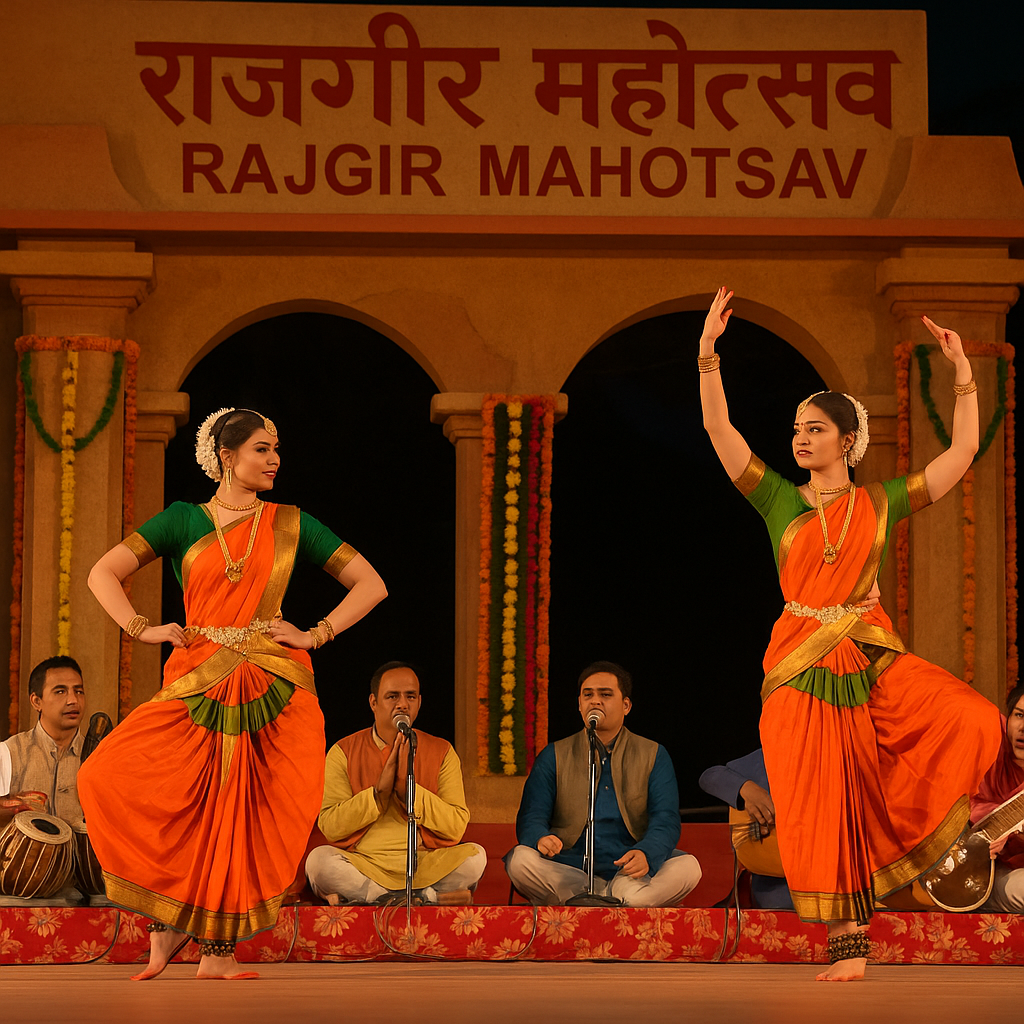
Music breathes life into Rajgir Mahotsav. Whether it is a soulful rendition of a Raga by a sitar maestro, a bhajan echoing through the hills, or a high-octane performance by folk musicians, the sounds of Rajgir Mahotsav are unforgettable.
Classical Indian Music
From Dhrupad and Khayal to Thumri and Bhajan, the festival features accomplished artists who showcase the richness of India’s classical music traditions. These performances are often held in open-air auditoriums, under the starlit sky, lending an ethereal quality to the experience.
Folk Music of Bihar
Bihar’s own musical traditions—such as Bhojpuri, Maithili, and Magahi songs—are highlights of the Mahotsav. Performed with traditional instruments like dholak, harmonium, and khartal, these songs explore themes of love, longing, festivals, and rural life.
Instrumental and Fusion
In recent years, the Mahotsav has also welcomed instrumental and fusion music. Artists blending Indian ragas with western jazz, or folk with electronic beats, attract younger audiences and expand the musical landscape of the festival.
6. Rajgir Mahotsav as a Platform for Cultural Exchange
One of the most important functions of Rajgir Mahotsav is its role as a cultural meeting point. Artists from across India and even abroad participate, interact, and collaborate. This exchange fosters innovation, mutual respect, and a shared commitment to cultural preservation.
Workshops and exhibitions are often part of the festival, allowing students, enthusiasts, and scholars to engage directly with performers. These sessions, ranging from dance technique to discussions on cultural history, add a pedagogical layer to the celebration.
7. Handicrafts, Food, and Rural Traditions
Beyond the stage performances, Rajgir Mahotsav offers a fairground filled with exhibitions, stalls, and food courts.
Handicraft Exhibitions
Local artisans showcase their crafts—Madhubani paintings, terracotta pottery, sikki grass items, and wood carvings—helping them find new markets and recognition.
Culinary Delights
Bihar’s traditional dishes such as litti-chokha, thekua, sattu paratha, and khaja are served to visitors, making food an important part of the cultural experience.
Village Life Representation
Some installations and exhibits simulate rural Bihar—mud houses, farming tools, and scenes from village life—giving visitors a peek into the traditional lifestyle that underpins the state’s cultural expressions.
8. Government Support and Organizational Excellence
The Department of Tourism, Government of Bihar, in collaboration with local bodies and cultural organizations, ensures that Rajgir Mahotsav is both a celebration and a strategic cultural initiative. Infrastructure, security, artist hospitality, and logistics are handled with great care, making the festival an exemplar of public-private coordination in cultural promotion.
Efforts are also made to ensure accessibility—free or nominally priced entry, seating for the elderly and differently-abled, and eco-friendly arrangements all contribute to the inclusive spirit of the festival.
9. Rajgir Mahotsav and the Global Stage
As India becomes increasingly visible on the global cultural map, Rajgir Mahotsav serves as a model of regional heritage festivals that can attract international interest. With improved digital promotion, social media engagement, and partnerships with cultural institutions abroad, the festival has the potential to become a global cultural tourism brand.
International travelers already drawn to Rajgir for its Buddhist legacy often find the festival an added attraction. With performances that transcend language and nationality, Rajgir Mahotsav is uniquely positioned to foster cross-cultural dialogue.
10. Rajgir Mahotsav in the Eyes of Visitors
Testimonials from past attendees—tourists, journalists, artists, and locals—offer glowing reviews:
-
“A perfect confluence of art, spirituality, and nature.”
-
“It was my first time witnessing Odissi dance under moonlight—surreal experience!”
-
“The folk music night felt like being in a Bhojpuri village fair. Raw and beautiful.”
These impressions highlight how Rajgir Mahotsav leaves a lasting emotional and sensory imprint.
11. The Deeper Purpose: Preserving the Soul of Magadh
Rajgir Mahotsav isn’t just about performances; it’s about preservation. As globalization threatens regional languages, art forms, and rituals, festivals like Rajgir Mahotsav play a crucial role in safeguarding intangible heritage.
By encouraging younger generations to witness, learn, and even participate in traditional arts, the Mahotsav ensures the continuity of Bihar’s living traditions. It reignites pride in the Magadh identity—an identity rooted in knowledge, tolerance, creativity, and community.
12. Future Vision: Strengthening and Expanding the Legacy
Looking ahead, Rajgir Mahotsav can explore several growth areas:
-
Digital Broadcasting: Live streaming and archived videos can reach global audiences.
-
Youth Involvement: School and college-level workshops and competitions.
-
Cultural Scholarships: Awards for emerging artists in classical and folk forms.
-
Eco-conscious Initiatives: Zero-waste goals, green energy stages, and biodegradable materials.
With thoughtful planning, the festival can evolve while staying rooted in its cultural ethos.
Conclusion: A Festival that Resonates Across Time
Rajgir Mahotsav is not merely a showcase—it is a soul call. It connects the past with the present, spirituality with celebration, and local traditions with universal art forms. It celebrates Bihar not as a forgotten land but as a flourishing center of India’s ancient and eternal culture.
In an age where digital distractions threaten deeper human connections, festivals like Rajgir Mahotsav remind us of the power of gathering, witnessing, and honoring heritage. As the beats of the dhol blend with the strains of the sitar, and as the footfalls of dancers mirror the steps of sages once walked on this land, Rajgir Mahotsav continues to echo the timeless cultural soul of Bihar.