
Beyond Religion: Eco-Spiritual Tourism in Rajgir, Nalanda & Pawapuri
Introduction
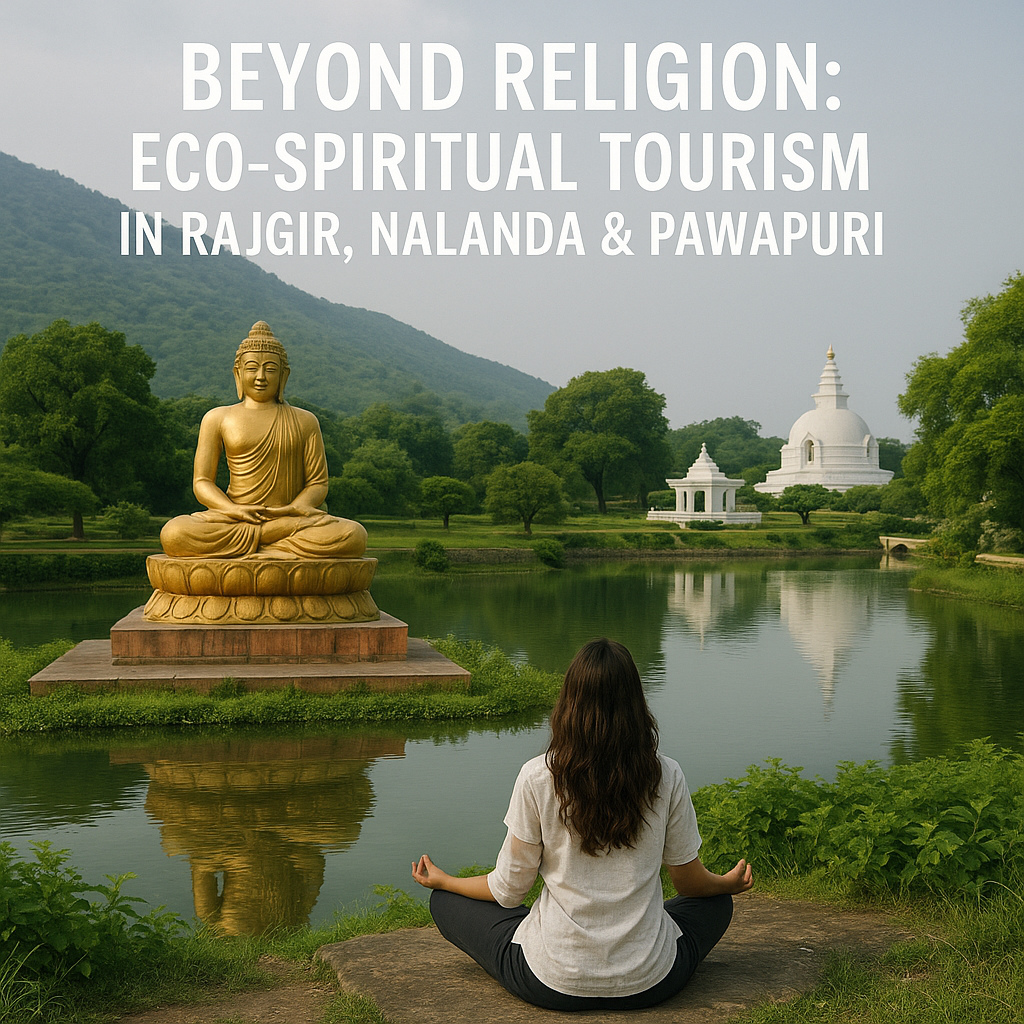
In the heart of Bihar lies a triad of timeless destinations—Rajgir, Nalanda, and Pawapuri—that transcend mere religious pilgrimage. These sacred places, intricately tied to the spiritual journeys of Lord Buddha and Lord Mahavira, offer more than historical insights or religious reverence. They are fast evolving into eco-spiritual tourism destinations, where inner peace harmonizes with environmental consciousness.
The shift from purely religious tourism to eco-spiritual tourism marks a meaningful transformation in how travelers engage with sacred spaces. It blends mindfulness with environmental responsibility, attracting seekers, historians, ecologists, and casual travelers alike. In Rajgir, Nalanda, and Pawapuri, this shift becomes an enriching journey into sustainability, heritage conservation, and spiritual awakening.
Understanding Eco-Spiritual Tourism
Eco-spiritual tourism combines ecological awareness with spiritual growth. Unlike conventional tourism, it emphasizes minimal environmental impact, cultural sensitivity, and personal transformation. Key components include:
-
Sustainable travel practices
-
Promotion of local economies
-
Preservation of biodiversity and sacred landscapes
-
Engagement in meditative, wellness, and educational experiences
Rajgir, Nalanda, and Pawapuri are ideal for this model due to their deeply rooted spiritual traditions, serene natural settings, and ongoing initiatives for environmental preservation.
Rajgir: Ancient Capital, Modern Harmony
Historical & Spiritual Significance
Rajgir, once the capital of the Magadh Empire, is a site steeped in the teachings of both Buddhism and Jainism. Lord Buddha spent many rainy seasons here, delivering profound sermons at Griddhakuta (Vulture’s Peak). Rajgir also served as a retreat for Lord Mahavira, whose footprints echo in its hills.
Eco-Spiritual Highlights
1. Griddhakuta (Vulture’s Peak)
This hilltop, where Buddha delivered the Lotus Sutra, offers a spectacular panoramic view and a spiritual ambiance perfect for meditation. Visitors can either hike the path or take the eco-friendly ropeway.
2. Vishwa Shanti Stupa
Built by the Japanese Buddhist community, the white Peace Pagoda sits on Ratnagiri Hill and represents world peace and harmony. The walk through the forests leading up to it is a tranquil eco-spiritual journey in itself.
3. Hot Springs and Nature Walks
The Rajgir Hot Springs, believed to have therapeutic value, are surrounded by lush landscapes. Adjacent trails, like the Swarn Bhandar and Cyclopean Wall paths, are ideal for eco-walks and nature meditation.
4. Rajgir Nature Safari
A newer attraction, the Rajgir Nature Safari promotes eco-tourism and education. It features glass skywalks, jungle safaris, and treehouses, all designed with minimal environmental footprint and renewable energy usage.
Sustainable Travel Practices
-
Electric buses within Rajgir
-
Use of biodegradable materials at tourist spots
-
Prohibition of single-use plastic
-
Waste management through local NGOs
Nalanda: Ancient Wisdom in a Green Setting
Legacy of Learning
Nalanda was home to one of the world’s first residential universities, active from the 5th to the 12th century. Here, Buddhism flourished through scholarly pursuits. The ruins of Nalanda Mahavihara, now a UNESCO World Heritage Site, speak of a time when education and spirituality went hand-in-hand.
Eco-Spiritual Highlights
1. Nalanda Archaeological Ruins
These extensive ruins include temples, classrooms, monasteries, and meditation halls built using natural materials. The tranquility of the site, surrounded by gardens and trees, offers visitors a serene walk into the past.
2. Nava Nalanda Mahavihara
A modern center for Buddhist and Pali studies, Nava Nalanda continues the tradition of spiritual learning. Its sustainable campus emphasizes green landscaping and minimalist architecture.
3. Nalanda Multimedia Museum
Educates tourists about the Buddhist philosophy, archaeological findings, and sustainable practices of ancient India.
Environmental Efforts
-
Solar lighting at heritage sites
-
Tree plantation drives involving schoolchildren and tourists
-
Eco-guided tours with focus on heritage preservation
Pawapuri: Jain Salvation and Ecological Purity
Spiritual Relevance
Pawapuri is one of the holiest sites in Jainism, where Lord Mahavira attained Nirvana in 527 BCE. His cremation site is now the Jal Mandir, surrounded by a pristine lotus-filled lake, symbolizing purity and peace.
Eco-Spiritual Highlights
1. Jal Mandir
An ethereal temple located in the center of a lotus pond, this shrine is accessible via a stone pathway. Its unique location enhances both spiritual reflection and ecological awareness.
2. Samosharan Temple
Built in concentric circles, this temple represents Mahavira’s final sermon platform. The surrounding gardens are maintained with organic practices.
3. Lotus Lake Biodiversity
The lotus lake is home to aquatic birds and serves as a local biodiversity hotspot. Efforts are made to prevent pollution and preserve its ecological balance.
Sustainable Practices
-
Strict prohibition of plastic near the temples
-
Use of natural dyes and organic materials for rituals
-
Waste-free temple kitchens and eco-friendly guesthouses
Eco-Spiritual Itinerary: A Sample 3-Day Tour
Day 1: Arrival and Rajgir Exploration
-
Morning: Arrival from Patna (via train or road)
-
Midday: Ropeway to Vishwa Shanti Stupa, meditation session
-
Afternoon: Lunch at eco-café using local produce
-
Evening: Visit Rajgir Hot Springs, forest walk
-
Overnight: Eco-lodge near Rajgir hills
Day 2: Wisdom Trails in Nalanda
-
Morning: Drive to Nalanda, tour of ruins with heritage guide
-
Midday: Visit Nava Nalanda Mahavihara
-
Afternoon: Lunch at a Jain/Buddhist vegetarian retreat
-
Evening: Walk in mango orchards and solar-lit paths
-
Overnight: Sustainable stay near Nalanda
Day 3: Serenity in Pawapuri
-
Morning: Visit Jal Mandir and lotus lake
-
Midday: Samosharan Temple and community kitchen tour
-
Afternoon: Participate in tree-planting or clean-up activity
-
Evening: Return journey to Patna or Gaya
How to Reach
By Air
-
Nearest airport: Gaya International Airport (for Rajgir and Nalanda)
-
Patna Airport (for all three destinations)
By Rail
-
Rajgir and Nalanda have small railway stations
-
Gaya Junction is a major railhead for Pawapuri visitors
By Road
-
Well-connected by NH-120 and NH-31
-
Local transport includes electric autos, e-rickshaws, and tour buses
Best Time to Visit
October to March offers pleasant weather, especially for eco-activities like trekking, meditation, and nature walks. Major festivals like Mahavir Jayanti, Buddha Purnima, and Rajgir Mahotsav draw cultural tourists too.
Responsible Tourism Tips
-
Carry reusable water bottles and bags
-
Respect temple customs and silence zones
-
Prefer vegetarian food at community-run kitchens
-
Support local artisans and eco-hotels
-
Participate in eco-volunteer initiatives like tree planting or lake cleaning
1-Day Eco-Spiritual Sightseeing Tour
For travelers with limited time, a curated 1-day eco-spiritual sightseeing package offers a fulfilling experience covering the key highlights of Rajgir, Nalanda, and Pawapuri. This is ideal for families, solo pilgrims, or small groups seeking a guided, comfortable, and eco-conscious journey.
Package Pricing:
-
Group Size (1 to 4 Persons): ₹4,500 with Sedan Cab
-
Group Size (5 to 7 Persons): ₹5,900 with SUV Cab
This full-day tour includes pick-up and drop services (from Gaya or Patna), eco-guided visits to major sites, and ample time for spiritual reflection and local cuisine exploration.
Custom Itinerary & Booking Assistance:
If you wish to tailor your travel experience, whether it’s adding meditation sessions, wellness stops, local cultural visits, or extended stays at eco-lodges:
 Email: info@shyamsawariyataxi.com
 Call or WhatsApp: +91 7633958866
Our eco-tourism support team will assist you in crafting a personalized journey that aligns with your spiritual and environmental values.
Conclusion
Eco-spiritual tourism in Rajgir, Nalanda, and Pawapuri is not just a journey through holy lands—it is an awakening. It teaches us to tread lightly, reflect deeply, and travel consciously. Here, in the sacred groves and ancient ruins, we find a blueprint for sustainable living inspired by timeless philosophies.
As more travelers seek meaningful experiences that go “beyond religion,” this triad offers a radiant path—where faith, heritage, and nature blend seamlessly, and where the past offers insights for a sustainable and mindful future.