
Rajgir Nature Safari & Glass Skywalk – Bihar’s New Adventure Hotspot
1. Introduction: Rajgir’s Evolution from Heritage to Adventure
Nestled in the verdant hills of Bihar’s Nalanda district, Rajgir is a town steeped in ancient history and spiritual significance. Once the capital of the Magadha empire and a place frequented by both Buddha and Mahavira, Rajgir has long been a pilgrimage destination. However, in recent years, Rajgir has embarked on an exciting transformation. No longer solely known for its religious and historical relevance, the city is rapidly evolving into Bihar’s premier adventure tourism hotspot.
At the center of this transformation are two standout attractions: the Rajgir Nature Safari and India’s first Glass Skywalk, inaugurated in 2021. Together, they have redefined the region’s tourism map, drawing nature lovers, adrenaline junkies, and curious travelers from across the country.
2. The Vision Behind Rajgir Nature Safari
The idea of developing a Nature Safari in Rajgir was born from two goals: to boost eco-tourism in Bihar and to provide a natural, sustainable alternative to conventional amusement parks and artificial resorts. Backed by the Government of Bihar and executed by the Department of Environment, Forest and Climate Change, this ambitious project was built inside the Pant Wildlife Sanctuary, a protected forest reserve that is home to a variety of flora and fauna.
Spread over nearly 500 acres, the Rajgir Nature Safari is not just a safari park—it’s an immersive wilderness experience. Visitors are taken on guided journeys through thick forests, hilly terrains, and specially curated wildlife enclosures, with a strong emphasis on conservation education and minimal environmental impact.
Key aims of the Nature Safari include:
-
Preservation of local biodiversity
-
Promoting responsible tourism
-
Generating employment for locals
-
Fostering environmental awareness
The safari is an excellent blend of education and excitement, appealing to school groups, families, photographers, and researchers alike.
3. The Landmark: India’s First Glass Skywalk
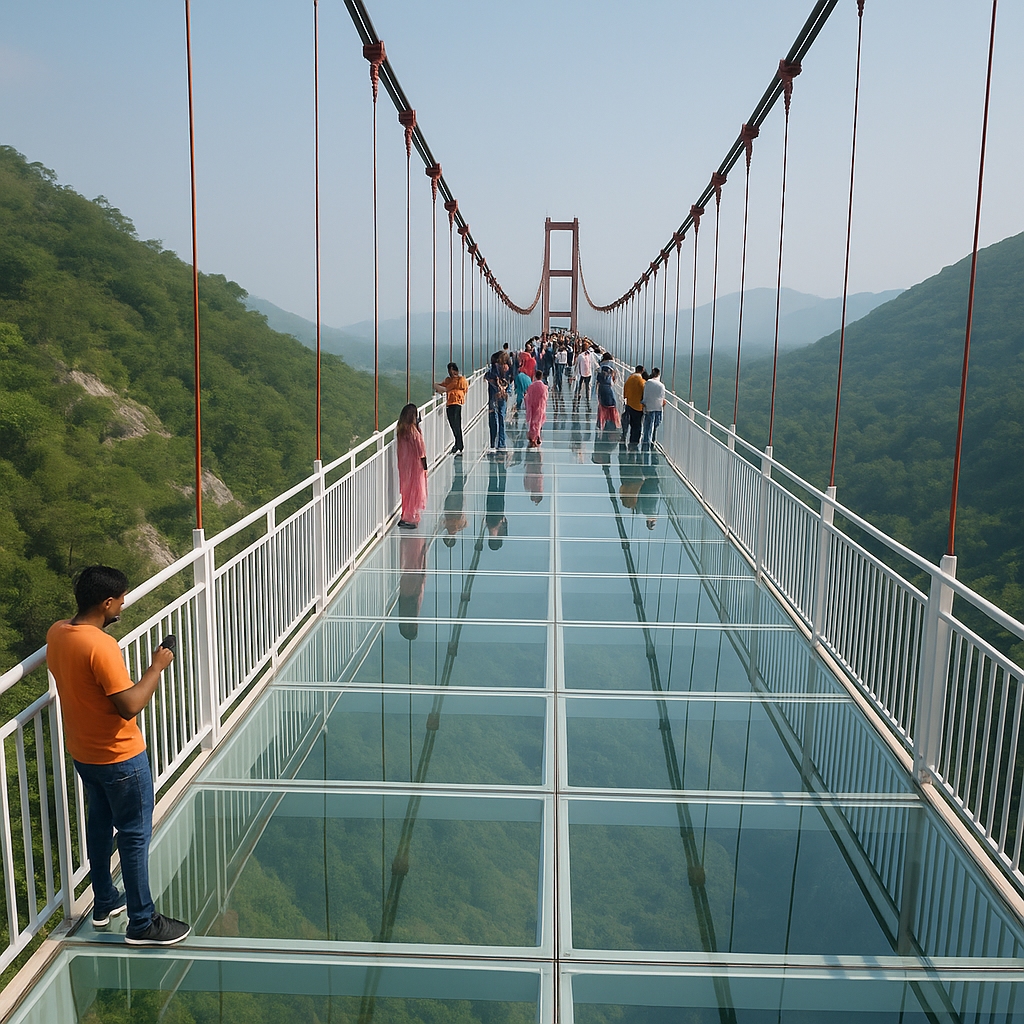
The highlight of Rajgir’s transformation is the Glass Skywalk, a bold architectural marvel constructed at a height of 200 feet above the valley floor in the Rajgir hills. Modeled after similar structures in China and the United States, this is the first of its kind in India, offering panoramic views of the surrounding forests and hills.
The bridge is part of the Rajgir Adventure Zone, situated within the Nature Safari complex. With its transparent, tempered glass panels and reinforced steel framework, the bridge gives visitors the thrilling illusion of walking in the sky. At 85 feet in length and 6 feet in width, it provides ample space for tourists to take in the beauty—and the adrenaline.
Visitors often describe the experience as both awe-inspiring and nerve-wracking—perfect for thrill-seekers and Instagram-worthy shots.
Key Features of the Glass Skywalk:
-
200 feet above ground level
-
Triple-layered toughened glass for safety
-
Limited entry for crowd control
-
Clear valley views, especially at sunrise and sunset
-
Photo points and seating areas
The Skywalk serves as a symbol of modernity meeting tradition—in a town where ancient ruins and high-tech construction now coexist.
4. A Haven for Adrenaline Lovers: Adventure Activities at Rajgir
What sets Rajgir apart from other eco-tourism projects in India is its diverse adventure offerings. The Nature Safari isn’t limited to scenic walks or wildlife observation—it caters to those who crave excitement. Within the Adventure Zone, visitors can test their courage and physical stamina across a range of high-intensity activities.
a. Ziplining
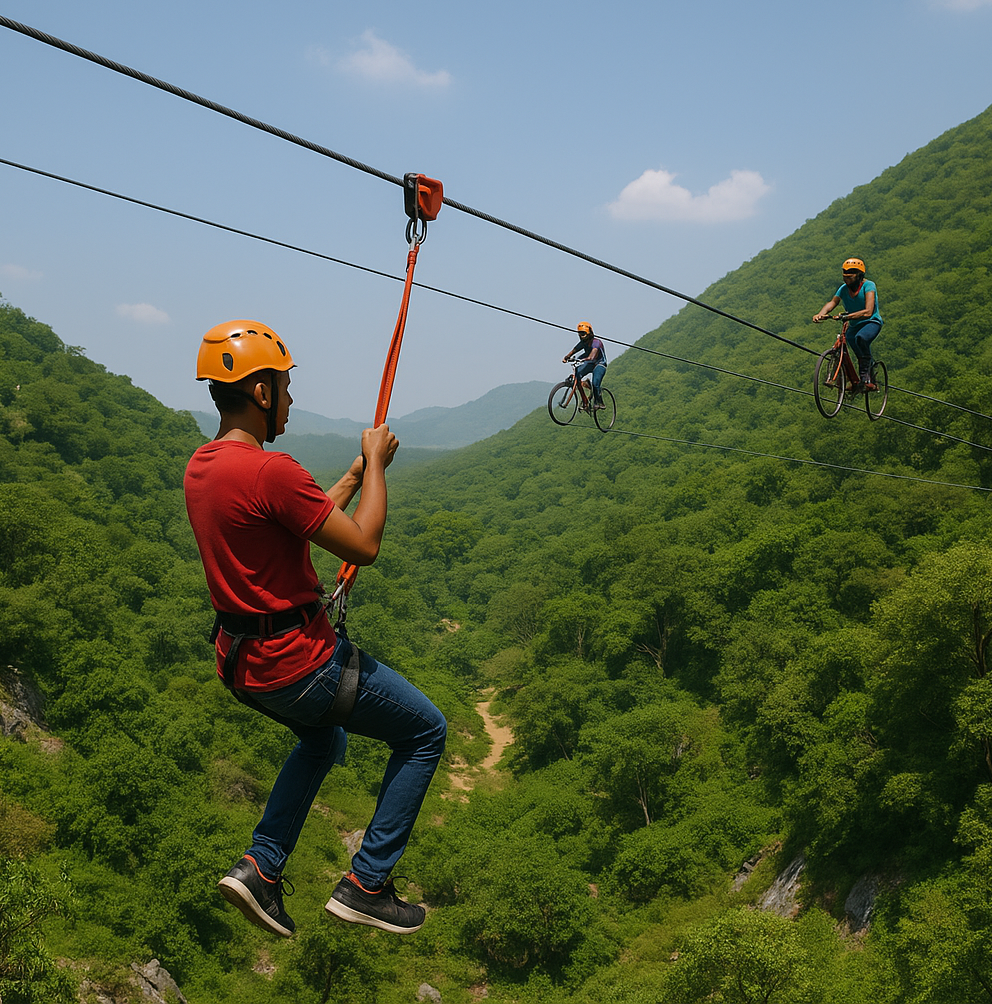
The zipline ride in Rajgir is one of the most exhilarating attractions. Suspended by a harness and pulley, thrill-seekers zoom from one hilltop to another at speeds exceeding 40 km/h. The sensation of gliding over the forest canopy with the valley unfolding beneath you is pure adrenaline.
Highlights:
-
Approx. 300-meter zipline
-
Hill-to-hill crossing
-
Supervised by trained adventure sports professionals
b. Sky Cycling
This one is not for the faint-hearted. Sky cycling involves pedaling a specially designed cycle across a narrow, elevated rope bridge. With only a safety harness between you and a 100+ foot drop, the activity tests your balance and bravery.
Why it’s special:
-
Unique setup in Eastern India
-
Offers panoramic views mid-ride
-
Couples and solo cycles available
c. Rock Climbing & Rappelling
Natural rock faces in the Rajgir hills have been repurposed into adventure climbing zones. Enthusiasts can enjoy bouldering, wall climbing, and rappelling under supervision. All safety gear—including helmets, gloves, and harnesses—is provided.
d. Trekking Trails
Marked trails of varying difficulty crisscross the sanctuary. From beginner-level nature walks to moderate hill treks, these offer a close-up look at the region’s biodiversity and geology. The early morning treks often reward visitors with sightings of birds and small mammals.
e. Rifle Shooting and Archery
For those who prefer land-based thrills, the Adventure Zone also offers target-based activities such as air rifle shooting and archery ranges. These are ideal for families and groups.
5. Into the Wild: The Safari and Wildlife Zones
The heart of the Rajgir Nature Safari is its carefully curated wildlife experience. Unlike traditional zoos, the safari offers a semi-natural environment where animals roam in expansive enclosures that mimic their natural habitats.
a. Thematic Zones
The park is divided into multiple zones, each dedicated to a specific group of animals:
-
Herbivore Zone: Includes spotted deer, sambar, blackbuck, and nilgai
-
Carnivore Zone: Separate enclosures for lions, tigers, and leopards
-
Bear Zone: Home to sloth bears
-
Bird Zone: Featuring peacocks, hornbills, parakeets, and other native species
b. Safari Vehicles
Tourists explore these zones in open-top, battery-powered safari vehicles that are both eco-friendly and noise-free, ensuring minimal disturbance to the wildlife. The safari is accompanied by trained guides who provide insights into animal behavior, conservation status, and forest ecology.
c. Aviary & Butterfly Park
Two standout mini-attractions:
-
Aviary: A walk-through dome filled with exotic and native birds
-
Butterfly Park: A botanical space filled with flowering plants that attract dozens of butterfly species native to Bihar
These exhibits are educational as well as photogenic, especially popular with children and photographers.
6. Facilities, Infrastructure & Safety First
A project of this scale demands not only spectacular attractions but also world-class facilities and rigorous safety protocols. The Rajgir Nature Safari delivers on both counts.
a. Visitor Amenities
-
Food Court: Featuring local cuisine, snacks, and beverages
-
Souvenir Shops: Handicrafts, eco-friendly goods, and Rajgir merchandise
-
Rest Areas: Benches, shaded shelters, and drinking water stations
-
Toilets: Clean and well-maintained across the park
b. Safety Measures
Given the adventure-heavy offerings, safety is a top priority. All activities are supervised by certified instructors and operators with training in first aid and emergency response.
Specific protocols include:
-
Mandatory helmets and harnesses for zipline/sky cycle
-
Weight and age restrictions for select activities
-
Regular maintenance checks of all structures and equipment
-
Wildlife viewing from safe distances with barriers and electric fencing
c. Accessibility
Efforts have been made to make the park friendly for senior citizens and differently-abled visitors, with wheelchair access, ramps, and reserved viewing areas.
d. Digital Ticketing and Crowd Control
Rajgir has embraced technology to streamline visitor experience. Tickets are booked online via Bihar Tourism’s official portal, and the number of daily visitors is capped to reduce congestion and protect the environment.
7. A Boon for Bihar: Socio-Economic and Cultural Impact
For a long time, Bihar struggled with a reputation that overshadowed its immense cultural and natural wealth. The launch of the Rajgir Nature Safari and Glass Skywalk has begun to reshape perceptions, positioning Bihar as an emerging player in India’s eco-tourism and adventure travel market.
a. Economic Growth Through Tourism
With thousands of tourists visiting monthly, the direct and indirect economic benefits are significant:
-
Boost in employment: Local youth have been trained and employed as guides, instructors, maintenance staff, and hospitality workers.
-
Increased revenue: Entry fees, parking, food services, and souvenir sales have created a new stream of income for the state.
-
Local entrepreneurship: Homestays, food stalls, cab services, and handicraft outlets have emerged rapidly in and around Rajgir.
The local government reports substantial monthly earnings, reinvested into forest conservation and infrastructure upkeep.
b. Cultural Revival
As tourists arrive to explore Rajgir’s natural offerings, they also engage with its spiritual and historical landmarks. This has revived local interest in:
-
Traditional performances (folk music and dance)
-
Buddhist and Jain heritage tourism
-
Native Mithila and Magahi arts and crafts
The result is a holistic travel experience where adventure, culture, and spirituality converge.
8. Soaring Numbers: Visitor Response and Tourism Statistics
Since its inauguration, the Nature Safari and Glass Bridge have seen record-breaking footfalls, particularly during weekends, school holidays, and winter months.
Visitor Trends:
-
Over 200,000 visitors in the first six months of opening
-
60% domestic tourists from Bihar, Jharkhand, West Bengal, and Uttar Pradesh
-
Increasing visits from Maharashtra, Delhi, and South India
-
Growing interest among international backpackers and photographers
Social media has played a major role in popularizing the Skywalk—Instagram reels, YouTube vlogs, and drone shots have gone viral, making Rajgir a trending destination.
Visitor Testimonials:
“I never imagined Bihar could offer this kind of thrill and scenery! Walking on the glass bridge was terrifying but unforgettable.” – Priyanka R., Mumbai
“Loved the zipline and safari. Kids enjoyed spotting deer and peacocks. Clean and very well managed!” – Arvind & Family, Patna
9. Nearby Attractions: Extend Your Rajgir Journey
Rajgir is not a standalone destination—it’s part of Bihar’s Golden Triangle of tourism, which includes Nalanda and Pawapuri, and lies close to Bodh Gaya, a UNESCO World Heritage Site.
a. Nalanda (15 km from Rajgir)
-
World-renowned Nalanda University ruins, dating back to the 5th century
-
Nalanda Museum and Archaeological Survey displays
-
New Nalanda Mahavihara, a modern academic and monastic center
b. Pawapuri (35 km)
-
Sacred Jain site where Lord Mahavira attained Nirvana
-
The serene Jal Mandir, built in the middle of a lotus pond
c. Bodh Gaya (70 km)
-
The Mahabodhi Temple, where Buddha attained enlightenment
-
Frequented by global pilgrims and spiritual tourists
Combining adventure at Rajgir with spiritual reflection at these sites makes for a diverse and enriching travel itinerary.
10. Travel Planning: How to Visit Rajgir Nature Safari & Skywalk
If you’re planning to experience this destination firsthand, here’s a comprehensive travel guide to help you get started:
a. Best Time to Visit
-
October to March is ideal due to pleasant weather
-
Avoid peak summer (April to June) when temperatures can cross 40°C
-
Monsoon (July–September) offers lush greenery but can impact adventure activities
b. Getting There
-
By Air: Nearest airport is Gaya International Airport (75 km), Patna Airport (100 km)
-
By Train: Rajgir Railway Station is well-connected to Patna, Gaya, and Delhi
-
By Road: Regular buses and taxis from Patna, Nalanda, and Bodh Gaya
c. Tickets and Booking
-
Online Booking: Available through Bihar Tourism’s Official Website
-
Ticket Prices (as of 2025, subject to change):
-
Nature Safari Entry: ₹250 per adult
-
Glass Skywalk: ₹125 per person
-
Zipline/Sky Cycle: ₹100–300 depending on activity
-
Student discounts and group packages available
-
d. Accommodation
-
Options range from budget hotels and hostels to government-run tourism guesthouses
-
Rajgir Residency, Indo Hokke Hotel, and Gargee Gautam Vihar are popular choices
-
Many travelers opt for stays in Nalanda or Bodh Gaya for broader access
e. Travel Tips
-
Wear comfortable shoes and clothes for adventure activities
-
Book tickets in advance, especially during holidays and weekends
-
Morning hours offer the best lighting for photos and wildlife sightings
-
Respect all wildlife and natural areas—no littering or feeding animals
11. The Future of Rajgir Nature Safari & Adventure Tourism in Bihar
Rajgir Nature Safari and Glass Skywalk are just the beginning of a larger eco-tourism vision for Bihar. The state government, under the Bihar State Tourism Development Corporation (BSTDC), is laying out long-term plans to make the state a pan-India adventure and nature destination.
a. Planned Expansions
-
Night Safari: Proposals are under review for limited-capacity night safaris with thermal vision tours
-
Botanical Garden: A massive garden with native plant species, medicinal herbs, and interactive educational zones
-
Adventure Expansion: Plans to include rope courses, giant swings, zip-zag ropes, and bungee ejection rides
b. Eco-Stay Projects
Eco-lodges and sustainable resorts are being encouraged through public-private partnerships (PPPs). These stays will offer tourists an immersive forest experience while ensuring minimal environmental impact.
c. Training & Employment
With the rising demand for trained guides and adventure operators, vocational training centers are being opened across Bihar to equip the youth with skills in:
-
Eco-tourism management
-
Safety protocols in adventure tourism
-
Foreign language hospitality
This positions Rajgir not just as a tourist site but as a model for responsible, inclusive development.
12. Nature First: Sustainability & Conservation Efforts
Despite the commercial potential, the Rajgir project has been designed with sustainability at its core. The sanctuary is part of the Pant Wildlife Sanctuary, and the forest is home to delicate ecosystems.
a. Eco-Friendly Infrastructure
-
Solar lighting, battery-operated vehicles, and green construction materials are used throughout
-
No plastic zones are strictly enforced
-
Visitors are issued eco-awareness pamphlets and requested to follow “Leave No Trace” principles
b. Wildlife Protection
-
Animal enclosures simulate natural habitats and avoid cages as much as possible
-
Veterinary care units and wildlife observation stations operate daily
-
Breeding programs for endangered species like the Indian sloth bear and sambar deer are being developed
c. Community Participation
Local communities, especially from tribal and forest fringe areas, have been integrated as partners in the tourism model. Their knowledge of the terrain and biodiversity is being utilized for:
-
Guided nature treks
-
Medicinal plant tours
-
Cultural performances and crafts
13. Personal Narratives: The Human Side of the Safari
Beyond numbers and policies, Rajgir’s transformation is best understood through the voices of those who’ve lived it—visitors, locals, and workers.
a. The Thrill-Seeker’s Tale
“I’ve done bungee jumping in Rishikesh and paragliding in Himachal, but Rajgir surprised me! The glass bridge made my legs shake—it’s so high, and yet, so beautifully peaceful.”
— Rehan Sharma, Adventure Blogger from Pune
b. The Family Outing
“My 10-year-old daughter loved the safari. It was the first time she saw a leopard up close. The park was clean, safe, and perfect for a family trip. And we even learned a lot about Bihar’s forests.”
— Sujata Singh, School Teacher from Gaya
c. The Local Guide’s Journey
“Earlier, we had to go to Patna to look for work. Now, tourists come to our home town. I’ve been trained in wildlife education, and I’m proud to show people the beauty of Rajgir’s forests.”
— Ravi Paswan, Nature Guide and Rajgir Local
14. Final Reflections: Why Rajgir Matters More Than Ever
In a country blessed with the Himalayas, deserts, beaches, and rainforests, it’s easy to overlook the forested hills of Bihar. Yet, Rajgir Nature Safari and the Glass Skywalk challenge those perceptions. It is not just an adventure destination—it is:
-
A symbol of Bihar’s revival as a tourist-friendly state
-
A platform for conservation education
-
A hub for inclusive growth and eco-awareness
-
And a bridge—literally and metaphorically—between modern India and its ancient roots
Rajgir, with its blend of natural serenity, adrenaline-inducing activities, and spiritual depth, offers something truly unique. Whether you’re a solo traveler seeking thrills, a family looking for fun and learning, or a pilgrim wanting to reconnect with history and nature—Rajgir invites you.
Conclusion
The opening of the Rajgir Nature Safari and Glass Skywalk marks a transformative moment not only for tourism in Bihar but for the entire narrative of Eastern India. From adventure sports to wildlife viewing, from eco-conscious design to cultural revival—this destination sets a benchmark.
With continued investment, responsible management, and community involvement, Rajgir has the potential to become India’s leading adventure-eco-cultural hub.